Visual Artefact Essay 2

Visual Artefacts Essay 2 by Maya Fenwick, Drawing and Print

Vanity is part of the Triptych of Earthly Vanity by Hans Memling, born in 1430. It depicts a nude woman stood with pride, holding a mirror. I will discuss this piece using Feminist Theory and how it is relevant today.

Although in my previous essay I discussed how negative the piece was, using feminist theory I have found a more positive way to view the piece of artwork. Even though traditionally the word vanity and the symbol of a mirror are used as criticism, today’s feminists might view it completely differently. 

Feminism in the past few decades has focused on many issues women have struggled with and still struggle with in day to day life, like oppression, sexualisation, abuse, lack of rights, being undervalued, female health, and many more. Recently especially on social media, body positivity has been more and more influential and body shaming has stopped being a norm in society, or at least it is no longer being brushed under the rug. With big name celebrities and influencers speaking out against photoshopped imagery, smear campaign articles that attack women’s bodies, and negative comments, women now more than ever are being encouraged to love their bodies. This brings me to my original point, a woman loving herself is no longer deemed as a bad trait, self-love is now celebrated and encouraged, therefore the painted woman in Vanity can these days be interpreted as self-love. Many movements lately are working hard to de-sexualise women’s bodies and encourage normalising things such as breasts and bellies, this also is influenced by outrageous situations in the court of law when rape victims are shamed for their outfits and skin showing, those situations have sparked a lot of controversies resulting in the MeToo movement and the Women’s March, which have done amazing things for women so far. 

Keeping these points in mind, the woman depicted in Vanity, could now be seen as inspirational instead of shameful. Her looking at herself in the mirror can now be interpreted by people with broader mindsets, as her admiring her body and sending out a positive message about acceptance. Although there are still a lot of body shaming people out there today with unrealistic standards for women, the vast majority of the public in the recent years have a more healthy and confident attitude towards bigger and less idealistic bodies. The subject of the painting Vanity, is stood with pride, looking at herself in the mirror as if, to herself, she is a sight, she looks confident and in love with herself. She is also painted in a fairly realistic way, (apart from the body hair issue I discussed in my earlier essay), her belly isn’t completely toned, she has a belly that sticks out more than her breasts do, and her thighs touch, and she looks confident despite those things, which tend to be considered “flaws”. She is confident nonetheless, and so she should be. Vanity shouldn’t be seen as a negative, it should be seen as self-love. The original context of the piece still remains as it was, however the way viewers interpret it has switched around drastically from the misogynistic, sexist, and sexualising way it was meant to be seen in 1430, into a powerful piece of acceptance, body positivity and self love. Maybe vanity isn’t so bad after all.

Visual Artefact Essay 1

Visual Artefacts Essay by Maya Fenwick, Drawing and Print

Vanity is part of the Triptych of Earthly Vanity by Hans Memling, born in 1430. It depicts a nude woman stood with pride, holding a mirror, which is known to represent vanity and lust. John Berger discusses this piece in his “Ways of Seeing” book which was published in 1972, and the issues that surround it from the view point of a male writer, and from my point of view as a woman. 

Throughout history women in nude paintings have been depicted in a certain way by male artists. John Berger spoke about this in his book in a very forward thinking manner for the time, when it was published in the United Kingdom in 1972, there was still plenty of stigma around female nudity. 

In historic European paintings, female nudes have been depicted as a subject of male desire, even in paintings that claim to have a deeper meaning, like religion. John Berger brings to our attention the fact that the female that is depicted as nude is always looking back at the viewer, which was always presumed to be male at the time (1485). She does this to make the male viewer feel important and in control, as if she’s looking to him for guidance, which seems like a superiority complex in my opinion. 

Focusing back on Vanity by Hans Memling, the particular painting in question. The woman depicted is almost criticised by the title of the piece, referring to someone as vain (self-obsessed), is hardly ever a compliment. The artist called her vain based on the grounds of the mirror, and proudly nude pose. But as John Berger stated, the artist was the one that made the conscious decision of placing the mirror in the woman’s hand. He also chose the pose that the woman is depicted in, and the artist then committed to calling the painting Vanity. However it seems that the woman is criticised for those choices, which is incredibly hypocritical. 

Another thing that struck me as hypocrisy is the way she is morally questioned for her nakedness, John Berger stated “morally condemning the woman whose nakedness you had depicted for your own pleasure” this is actually still mirrored in society now. Women are blamed for assault due to, and shunned for their skin showing, even in hot weather. The female body is treated in a very strange way in society, men beg to see it, but when they do, the woman is criticised.

This is exactly the behaviour that is shown by historic artists, including Hans Memling, and many others.

Another aspect of the painting that stuck me as strange is the lack of body hair on the woman, during the time period it is unlikely that the woman shown would have been cleanly shaven as shown in Vanity. This is yet another example as to how women are depicted in old paintings in an idealistic way for the pleasure of the painter and viewer, and not to show the woman accurately as she is as a individual person. 

However despite all the negative traits that are very prominent in Vanity, John Berger made a point that the mirror could be interpreted in a more positive manner, 

“It was to make the woman connive in treating herself as, first and foremost, a sight.” Which could actually suggest body positivity and self care, the sheer name of the piece suggests that this is not the case, but it’s a more positive interpretation and a way of giving more power and love to the woman in subject, and not looking at her with criticism like the artist and other viewers most likely did at the time. 

Questioning Paradigms

Paradigms are aspects of a person that make up who they are, here I will discuss the paradigms of Egon Schiele and how they affect how an audience might view his artwork.Image result for egon schiele

  1. white Austrian.

Egon Schiele was born in Austria in 1890, making him a white man in a predominantly white country at the time. This explains to the viewers why his work shows mostly (if not only) white women and men.

2. convict.

Schiele was convicted and sent to prison for 24 days for “Public Immorality” in 1912, because the minors who hung out at his studio after school had allegedly been exposed to erotic works of art. This could change a viewer’s perspective of a nude piece, knowing that children were in that environment.

3. young male.

Egon Schiele being a young male could change the way one perceives his work because the main focus of his artwork is explicitly nude women but he also uses the subject to empower sexuality and femininity and not in a seductive idealised way.

4. Gustav Klimt’s apprentice.

In 1907 Gustav Klimt became Egon Schiele’s mentor, Klimt’s influence is noticeable around that time for a few years. In 1912 Schiele painted The Hermits, which was a self portrait with Klimt, as a homage to their friendship.

5. degenerate.

In 1933, when hitler was seizing European artwork that didn’t suit his taste of classic beauty, Egon Schiele’s work fell into the category and was labelled Degenerate Art. About 5,000 pieces of art were secretly burned in Berlin in 1939. This could change the viewers perspective of Schiele’s work as more independent and educational, because ironically, being given that label gave the work more weight in the long run.


Fifth Phase of Participatory Culture

Assimilation

With the rapidly increasing world of technology, there is very little that is not at our finger tips, with home heating systems that you can control from your phone, phone calls through the car stereo, the world is very close to what science fiction writers had in store for us many years ago. Stereotypes found in old movies of home robots in aprons doing your chores or speaking to you and fully understanding a conversation can be seen in a vast number of homes in the United Kingdom, but in smaller packages. Amazon’s Alexa and Google Dot have now found their way into the everyday family home, and speaking to a robot in your front room has become a normal occurrence. But is it making us lazy, and more importantly, is it safe? The way that these gadgets work is by listening to you throughout the day looking out for the words “Hey Alexa” or “Hey Google”, meaning that by buying these additions to your home you are agreeing to a robot analysing everything you say, which also means your conversations are stored on a server. Is this a safety concern? Reports have been made in the past of families having a conversation amongst themselves, about a product or a brand and then immediately having an advertisement for that particular product, show up on their social media, which makes you question how the information Alexa and Google know about you, is used by a third party. Perhaps we are closer to another old Science Fiction stereotype, the one where we make robots too smart for our own good.

Visual and Cultural Hierarchies: Drawing and Print

Käthe Kollwitz (1867-1945)

Image result for kathe kollwitzImage result for kathe kollwitz

Woman with Dead Child, soft ground etching, 1903.       Self-portrait, woodcut, 1924

Käthe Kollwitz is the very definition of Drawing and Print in my eyes, her skills in both fields were and still are considered outstanding. Her woodcut prints are atmospheric and almost have a deep unspoken meaning. Her drawings and etchings of bodies show great accuracy as well as knowledge of human anatomy.


Katsushika Hokusai (1760-1849)

Image result for Fine Wind, Clear MorningImage result for the great wave

Fine Wind, Clear Morning (Red Fuji), 1832.                              The Great Wave off Kanagawa, 1832

Hokusai’s Japanese prints are iconic in the industry, and The Great Wave is by far his most popular piece. The process is fascinating, he uses a separate woodblocks for each colour, which is very time consuming but the results are incredibly beautiful.


Pacita Abad (1946-2004)

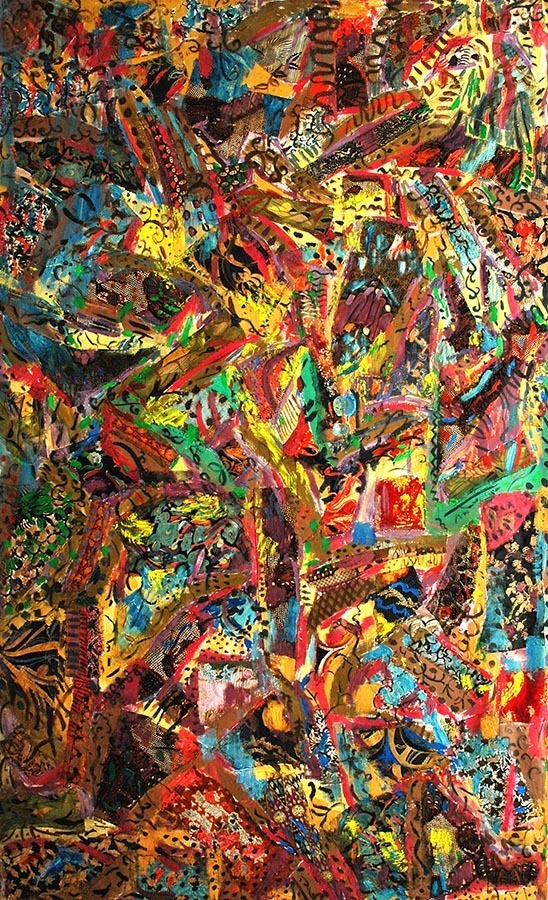
Image result for pacita abadImage result for pacita abad the sun is shining

Filipina: A Racial Identity Crisis, 1992              The Sun is Shining, 2001

Abad’s vibrant and colourful abstract works are all varied in texture, media and base, which are known to have been canvas, paper, metal, bark cloth, glass and ceramics. I find her to be a very expressive mixed media artist, as she was born on a small island in the Philippines and moved to the United States and earned herself a degree in Asian History. She is incredibly well travelled and has worked in over 50 countries and lived on 6 different continents, I find her to be a very inspirational woman and artist.


Americo Makk (1927-2015)

Image result for americo makkImage result for americo makk

Amazonas, 1959                                             Alpes, oil on canvas, 1927

Makk was another travelling artist who has worked in multiple countries like Hungary, Brazil and the United States. The “Amazonas” painting was created during his trip to the Amazon rainforest to study the indigenous tribes of the Amazon. Travelling and creating art from new areas on the world is such a compelling concept to me, learning all about different cultures and countries and capturing them in paintings.


Michelangelo (1475-1564)

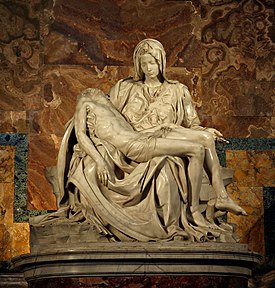
Image result for michelangelo paintingsImage result for michelangelo paintings

 Pietà, Marble, 1499                                                        The Fall of Man, 1510 (Sistine Chapel Ceiling)

Michelangelo was praised as the greatest artist in the 16th century, and has influenced many areas of art development. He was a remarkable sculptor and painter, although never considered himself much of a painter. I find his work captivating because it conceives an atmosphere of elegance and history. Being one of my favourite artists to research and study I was compelled to add Michelangelo to this list of artists who have made history, as this man has influenced the field for centuries.


Vincent Van Gogh (1853-1890)

Almond Blossom, 1890 by Vincent Van GoghCafé Terrace at Night, 1888 by Vincent Van Gogh

Almond Blossom, 1890                                                                                            Café Terrance at Night, 1888

Vincent Van Gogh was iconic and influential in the field of impressionism. He is one of my favourite painters when it comes to the usage of colour, I find his work so rich and deep, as Van Gogh once wrote to his sister, that to him, “the night is richer in colour than day”, and that is why I find his night time scenes so compelling. In the second image, which just so happens to be my favourite Van Gogh painting, he did not use black at all, even though it is a night scene, instead he reached for deep blue hues which looks beautiful again the warm yellows and oranges, Van Gogh’s colour contrasts are stunning in everything he does.


Maggi Hambling (1945-  )

Image result for maggi hamblingImage result for maggi hambling good time george

Bold Breaking Waves                                                                                   Good Time George

Maggie Hambling uses broad brush strokes and colour to create a faint feeling of shapes and objects from afar. I love her choice of cool tones mixed with a hint of warmth, like a yellow or orange stroke here and there. I think this technique gives her pieces a real feeling of movement and fluidity, which works particularly well on the waves.


Emil Orlík (1870-1932)

Image result for emil orlikImage result for emil orlik

Jules Pascin drawing, drypoint, 1911                                                       Bohemian Village, colour woodcut, 1898

Orlík’s prints are beautifully delicate and muted, which makes them look friendly and warm in my opinion. The Jules Pascin in particular looks so fragile but lovely, the skill that went into the precisely thin lines, and the tonal differences in the hair, that were achieved through pressure changes are remarkable.


Egon Schiele (1890-1918)

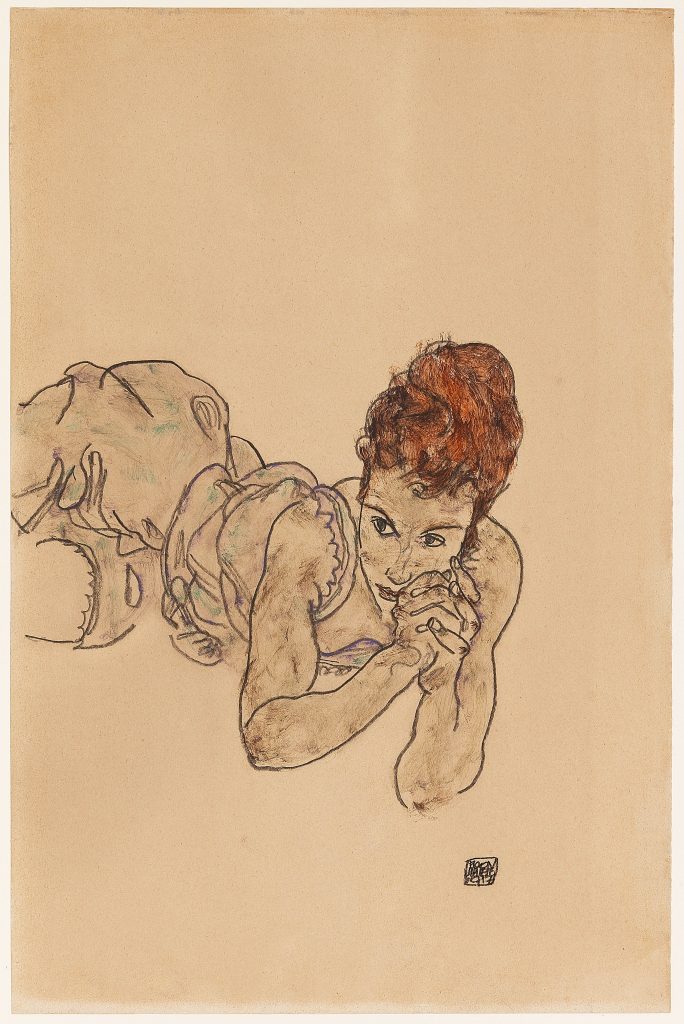
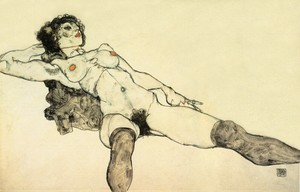
Egon Schiele, Reclining Woman,Image result for egon schiele

Reclining Woman, gouache and black crayon on paper, 1917           Reclining Female Nude with Legs Spread, 1914

Egon Schiele is very well known for his drawings of nude bodies, he drew both men and women in the same way, unlike a lot of artists that focus on women when drawing nudes, which is quite forward thinking for his time, (although I did pick two women as the examples but that’s simply because I love these in particular). The lack of backgrounds is lovely and simple, and almost gives the figures a feeling of floating, which a lot of art teachers and lecturers try to tell us is a bad thing, but I think it can be unique and revolutionary.

Bob Ross (1942-1995)

Image result for painting by bob rossImage result for painting by bob ross

Bob Ross is possibly everyone’s favourite human being. His Joy of Painting series is happiness materialised into an hour of painting. Personally Bob Ross taught me how to paint pine trees, and snow, he inspired millions of people to paint and get creative. This also means that there are plenty of copies of Bob Ross’ paintings, which made it very difficult for me to find original examples, without watching and screenshooting an episode. Everything about him is calming and relaxing, the painting outcomes themselves and his demeanour.

Glossary

The Avant-Garde Era – is considered to be an art movement which is along the lines of modernism. Thought to have begun around the 1850s influenced by Gustave Courbet, a French painter.

W.E.B, DuBois – William Edward Burghardt Du Bois was an American sociologist and civil right’s activist that was known as a Pan-Africanist (worldwide movement that aimed and still aims to encourage and strengthen unity of all people of African descent). He has written multiple books about racism and African heritage, such as The Souls of Black Folk and Black Reconstruction.

Contemptuous – scornful/the feeling that a person is worthless or beneath consideration.

Self-actualisation – the fulfilment of talents and abilities.

Superimposed – layered over something but with both objects still being visible. (“As the scale changes, layers of time are superimposed”)

Perceptual – becoming aware of a situation with help from your senses. (“a witness ready to change testimony at the slightest perceptual provocation.”)

Glut – large supply of something. (“All of us are now sure that the glut of history, rumour and evidence…”)

Intrinsic – essential/necessary. (“The wall itself has no intrinsic esthetic”)

Sporadically – occasionally/sometimes. (“This suggestion is made only sporadically through the eighteenth and nineteenth centuries”)